Hi Coaches,
Every September we hear the same two questions. From a parent or teacher starting a brand-new team: "Where do we even begin?" And from a coach who has run a program for years: "Half my kids are new this season. How do I get them up to speed without losing the returning students?"
Both are first-year situations, and both have the same answer: a short list of things to do in the next six weeks, in roughly this order. Here it is.
First, a schedule change
Our August email listed the Skills Only event on October 21. It has moved to Sunday, October 25, 4:30 to 7:30 PM at Mary Our Queen School. Everything else about it is unchanged, and it is still the best first outing for a new team. Details below.
1. Register the team on VEX Events
Nothing else works until this is done. Team registration for the season happens at events.vex.com, and it is separate from signing up for individual events. A brand-new team gets a team number assigned; a returning team renews the number it already has.
- Registering or Renewing a Team (Global Robotics Library)
- Our own walkthrough: Registering for tournaments
Schools and nonprofits with seven or more teams may qualify for fee waivers on teams seven and up. Register early: local events open registration on a schedule, and you cannot sign up for an event until the team exists.
Brand-new organization? If you are still figuring out kits, a field, a meeting space, or a budget, email us before you spend anything. Our Team Support and Mentoring program exists for exactly this, and the honest answer to "what does a team need?" is less than you think: two to six students, one adult who organizes and encourages, a VEX IQ kit, this season's game elements, and a place to meet. See Starting a VEX IQ team.
2. Learn Level Up, students first
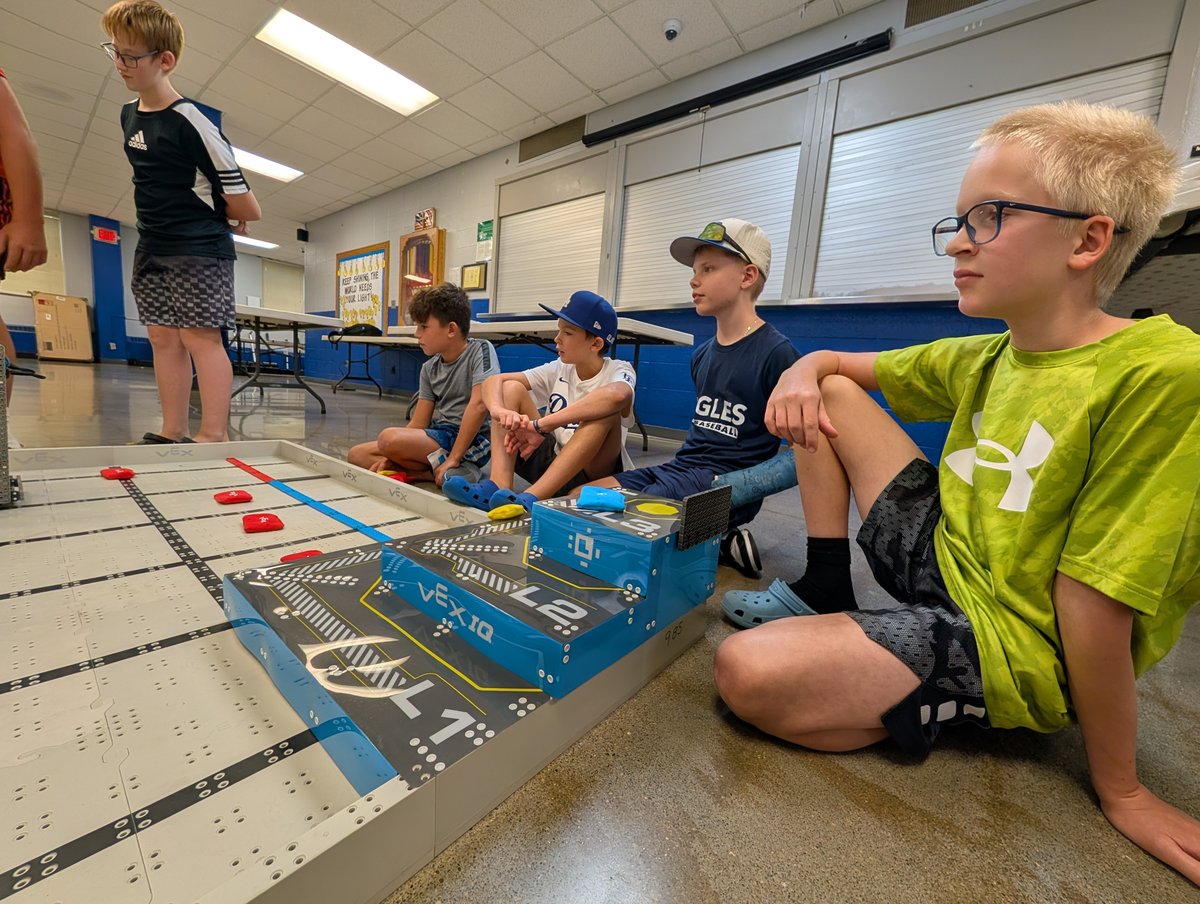
This season's game is Level Up. Robots score bean bags into tiered goals on a 6 by 8 foot field, and higher goals are worth more points, from 1 point on the floor up to 16 points at the top level. In the Teamwork Challenge, two robots share the field for 60 seconds and score as an alliance. In Robot Skills, one robot runs alone, once under driver control and once fully autonomous.
- Level Up Game Manual, version 2.0 (released September 3)
- VIQRC current game page
- 2026-27 competition video playlist
A tip that pays off all season: have the students watch the game video and read the scoring section themselves, then explain it back to you. Students who understand how points are earned design with a lot more purpose, and they are the ones who have to explain it to the judges later anyway.
Existing program with new students? Level Up is new to your returning students too. Watch the game video as a whole team, new and returning together, before anyone touches a kit, then walk through the highlights of the Game Manual the same way: the scoring table, the Teamwork Challenge and Robot Skills formats, and the robot size and part rules that inspection checks. Returning students will catch things they would have skipped, and new students hear it from their teammates rather than from you.
3. Build the Hero Bot, then let the students change it
VEX publishes a starter robot every season. This year it is Flop, and it is the right first build for any team that has not built for Level Up before, including returning teams whose robot from last season no longer fits the game.
- Flop build instructions
- Level Up Game Kit (field and game elements)
Brand-new team and want a guided path? VEX publishes a free STEM Lab, Competition 101: VEX IQ Level Up, built around exactly this: seven sessions that take a team from the game introduction through building and driving Flop, working out a strategy, improving the robot, and preparing for competition day. If you are a first-year coach and want something to follow practice by practice, start there. It is the plan below, with the lesson plans already written.
Flop is a baseline, not a finished competition robot. The point is that your students have a driving, scoring robot within the first two or three practices, and then start asking "how could this be better?" That question is the whole program. The students build it, the students change it, and the coach keeps the parts sorted and asks good questions.
If you have a mix of new and returning students, one approach that works: the returning students build Flop from the instructions while the new students follow along and hand parts, then swap roles for the first modification.
Once Flop drives, teach the mechanisms. Traeton Dansby, who coaches in Bixby, Oklahoma, has shared a set of step-by-step VEX IQ build guides for the mechanisms students keep reaching for: standard, H, and X drive bases, 4-bar and 6-bar arms, a rotating arm, worm and bevel gear demos, cam and slide, linear motion, a motor-share mechanism, and a sensor demo board. Each is a short build that a pair of students can finish in one practice and then explain to the rest of the team. They are the best answer we have seen to "how could Flop be better?"
- Bixby's CAD Manual: VEX IQ mechanism build guides (Google Drive, shared by Traeton Dansby)
4. Start the engineering notebook on day one
Notebooking is a core part of VIQRC, and the teams that do well with it are the ones that started on the first practice, not the week before a tournament. Paper or digital both work. Pick one and make dated entries every practice: what you tried, what happened, what you will try next.
- notebooking.vex.com (paper and digital options)
- Digital: Template | Instructions | Digital IQ parts
- Paper: use a bound notebook, add a table of contents, date every entry, bring it to events
If a new student is interested in the notebook, it can be a good fit: nothing is obvious to them yet, so they tend to write down the reasoning that returning students skip.
5. Put a low-pressure first event on the calendar
The single most useful thing a first-year team can do is compete early, before the robot is "ready." Here are the three we would point you to, in order.
Skills Only, Sunday, October 25. 4:30 to 7:30 PM at Mary Our Queen School, elementary and middle school both welcome, $10 per team, 40 team spots. Your robot does not need to be finished. Students see the field up close, try Driver and Autonomous Coding Skills runs, and trade ideas with other teams. Registration is open now and closes at noon on October 21.
Register for Skills Only on VEX Events
Omaha Area League Play for Emerging Teams. Four Monday evenings at Mary Our Queen: November 2, 16, 30, and December 14, roughly 4:15 to 7:00 PM. League play splits a tournament into short sessions weeks apart, so a new team gets to compete, go home, fix things, and come back. It was built for first-year teams. 26 team spots, and registration is open.
Register for League Play on VEX Events
Then one tournament. Once the students have a league session or two behind them, pick a Saturday tournament in November or December from the season calendar. One league or a couple of tournaments is a full, satisfying first season. You do not have to do everything.
The week before your first event, read Your first tournament with your students. It takes the mystery out of check-in, inspection, and the drivers meeting.
Your six-week checklist
- Team registered on VEX Events (or renewed), team number in hand
- Kit, Level Up game elements, and a meeting space sorted
- Students have watched the game video and can explain the scoring
- Flop built and driving; first student modification underway (Competition 101 if you want the guided version)
- Engineering notebook started, dated entries every practice
- Registered for the October 25 Skills Only event
- Registered for League Play (or a November tournament picked)
- Coach has emailed us with the one question that is still nagging
We're here to help
gainingSTEAM offers coach support, mentoring, training, and event assistance across Nebraska. For events we host or support, we provide the tournament equipment: fields, electronics, tablets, displays. If you are new and want a quick "Coach 101" conversation before your first practice, email us and we will connect you with an experienced coach nearby.
- Email: [email protected]
- Web: gainingSTEAM.net
Looking forward to seeing your students on the field in October,
Brandon Petersen